
(continuer en français) – Published: September 5, 2026
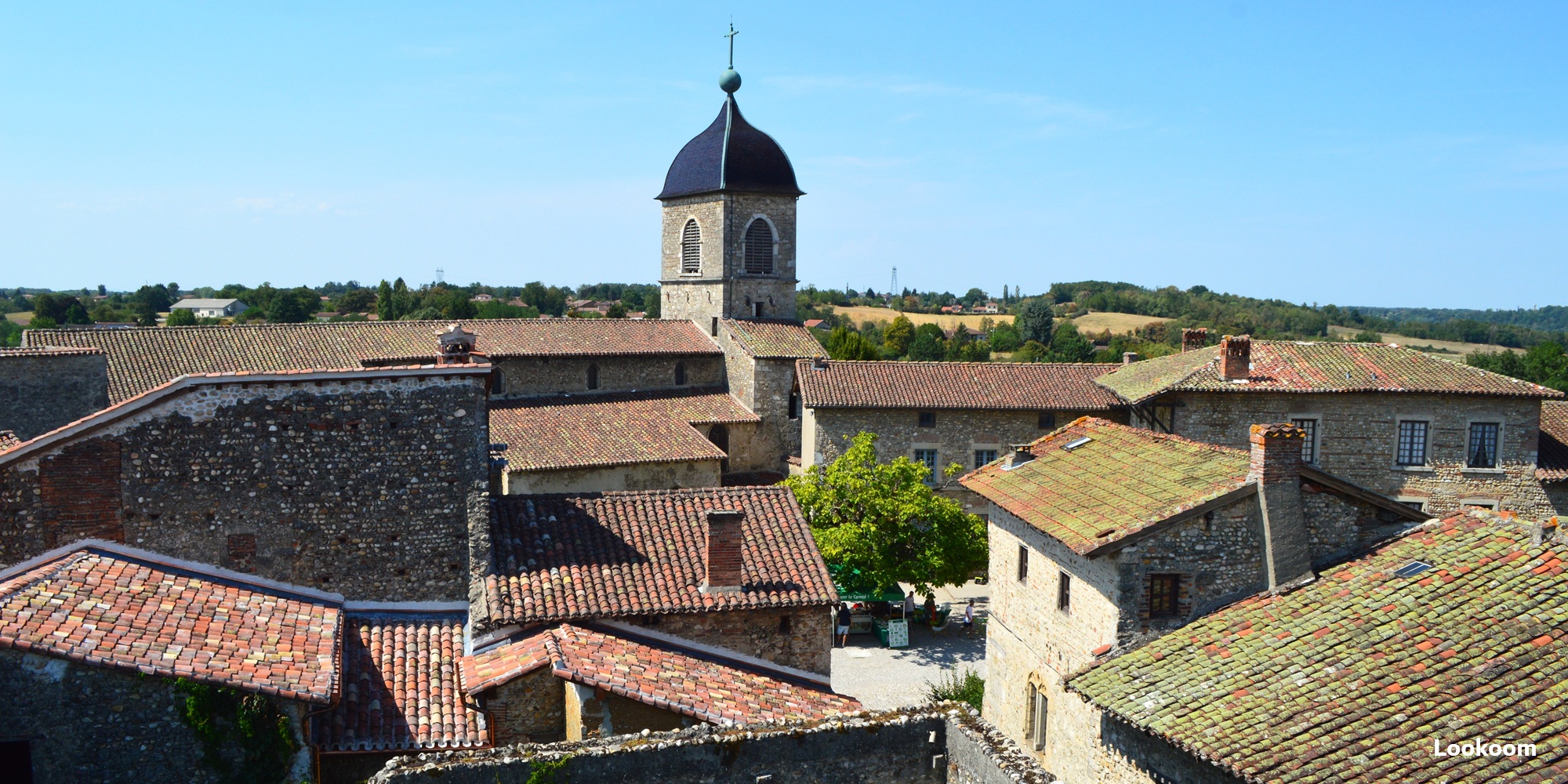
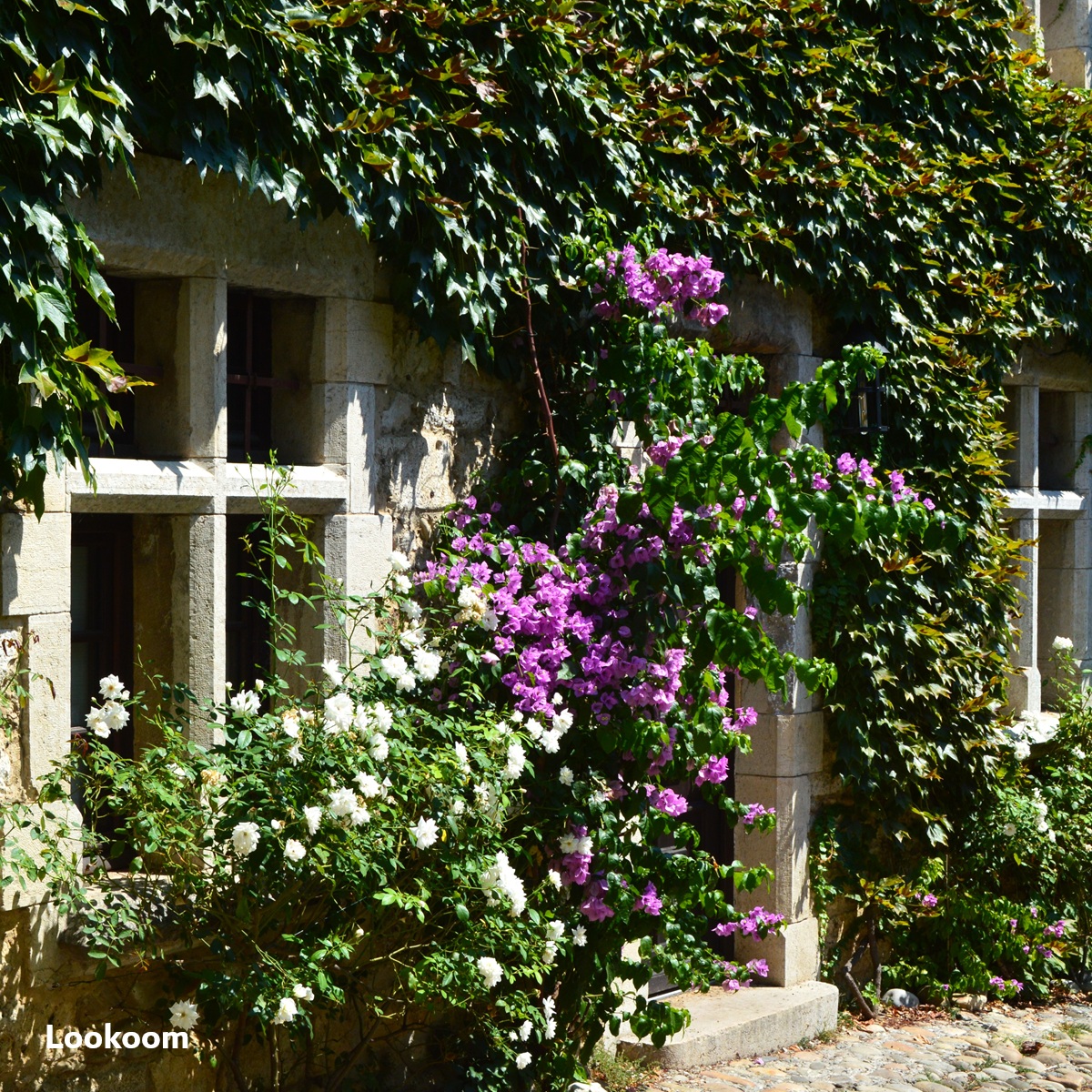
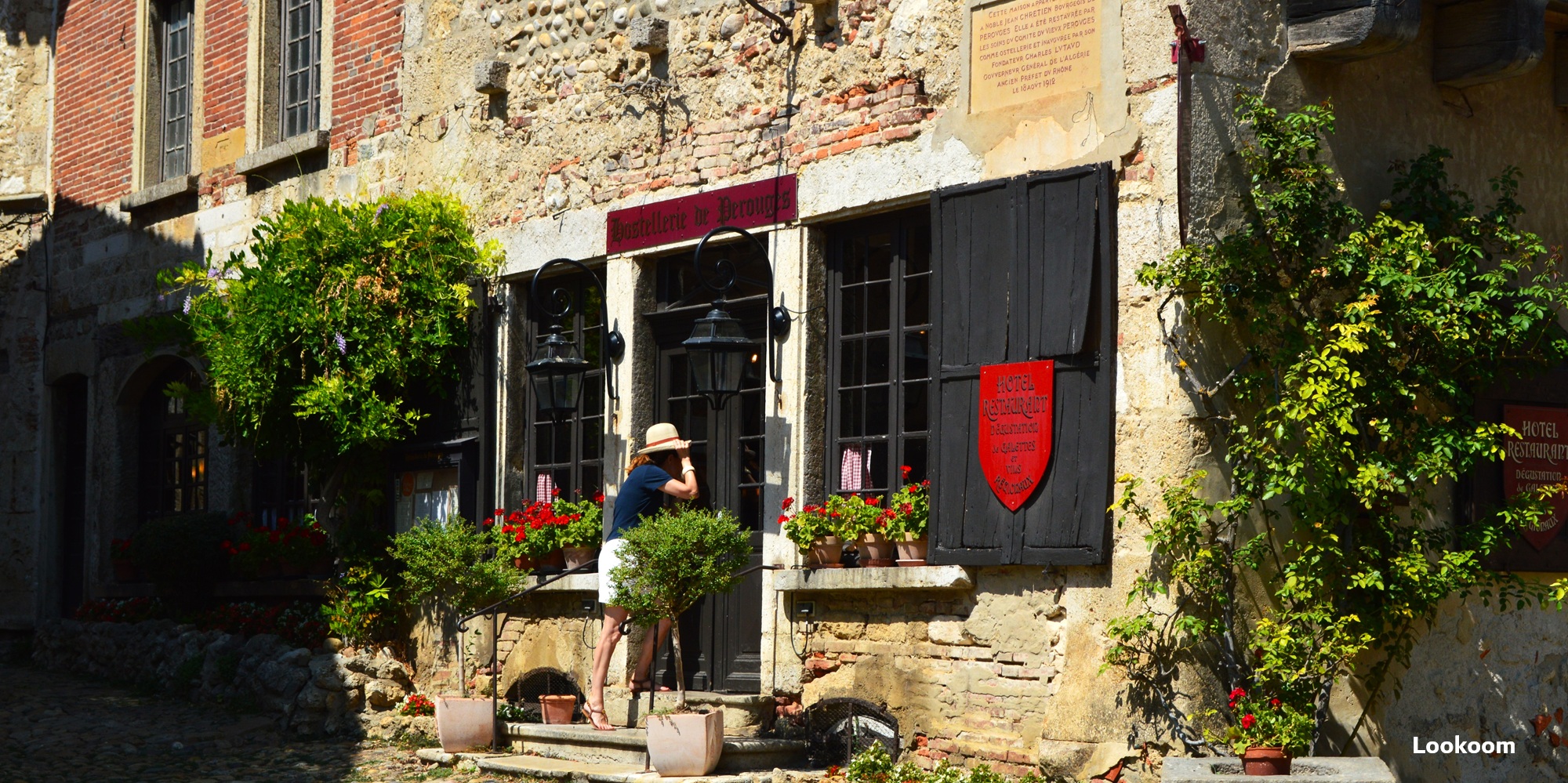
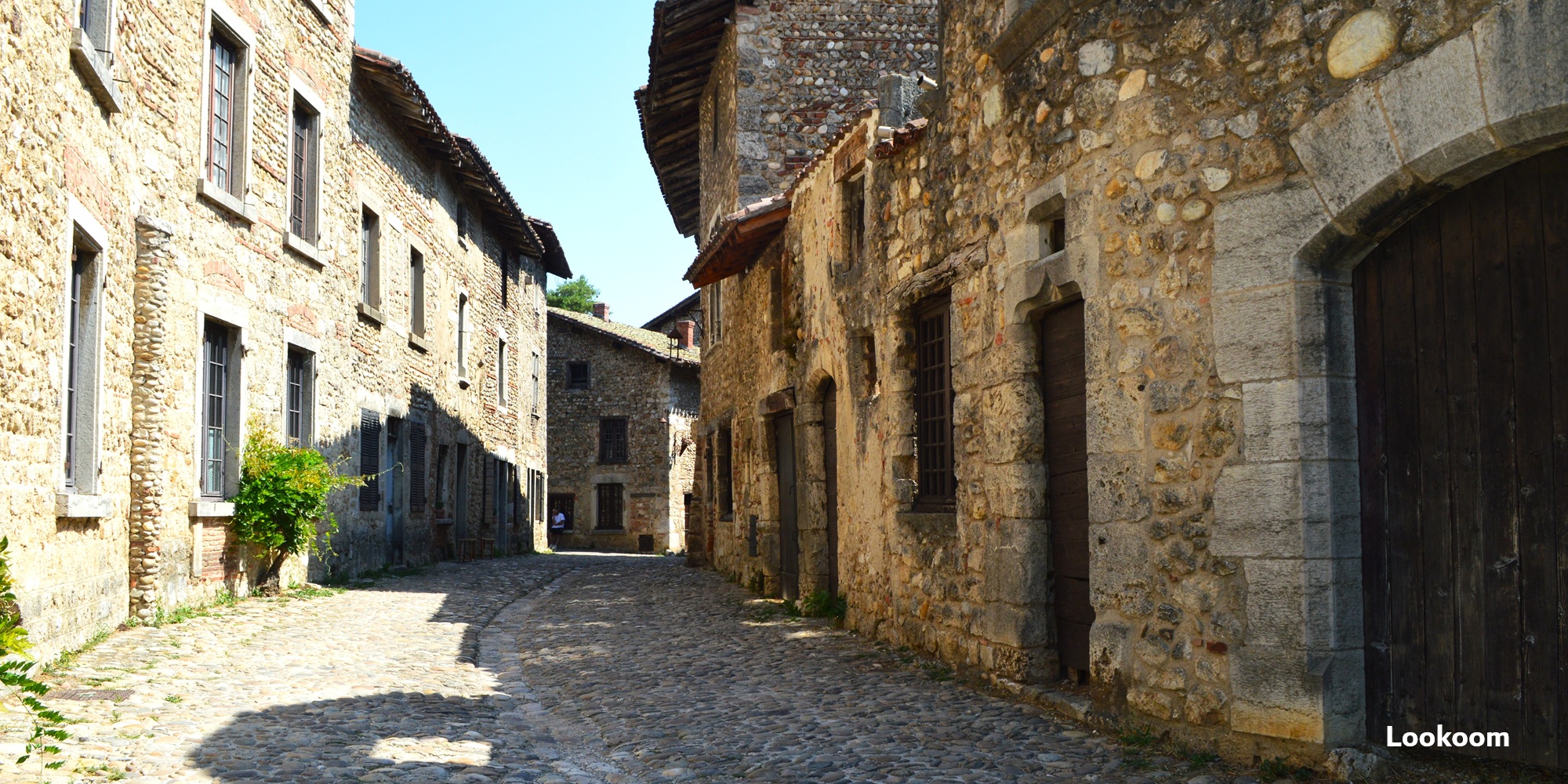
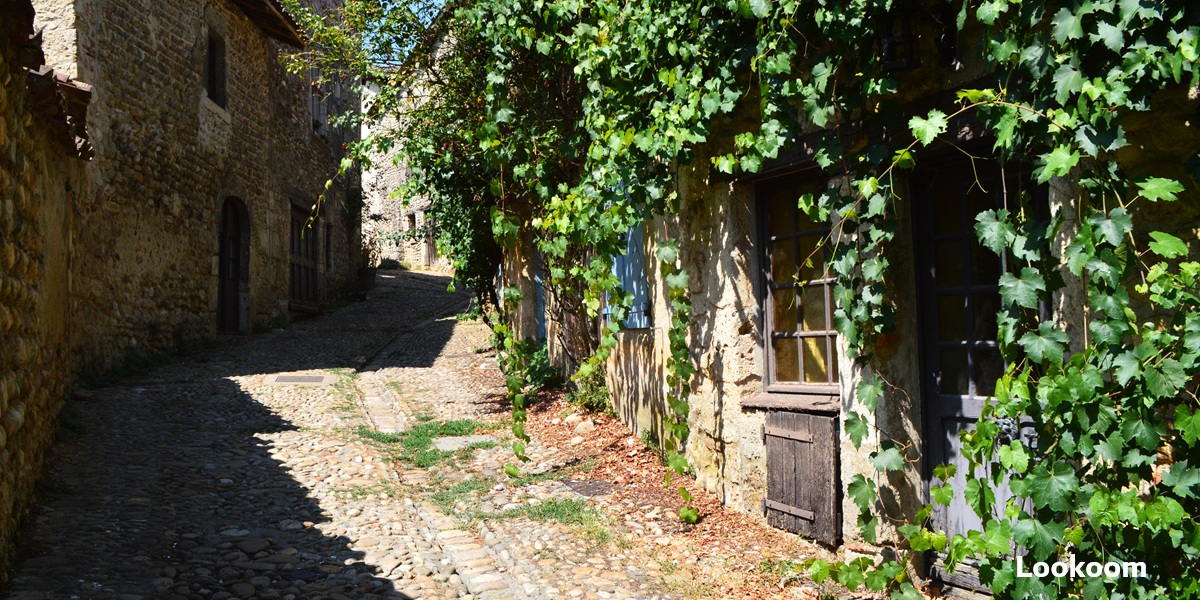
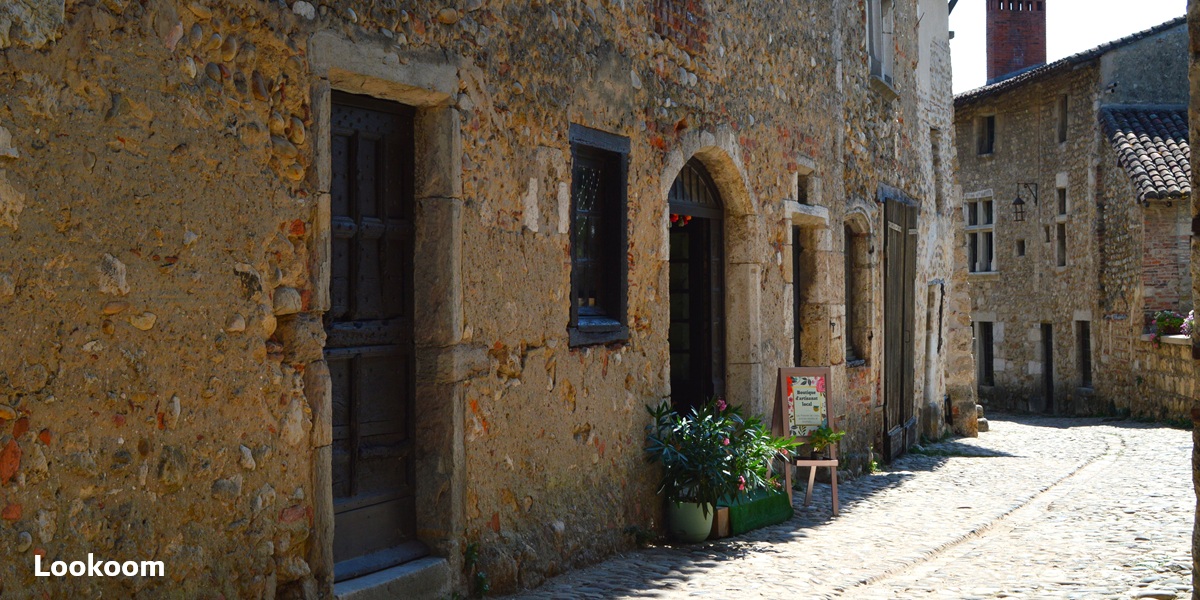
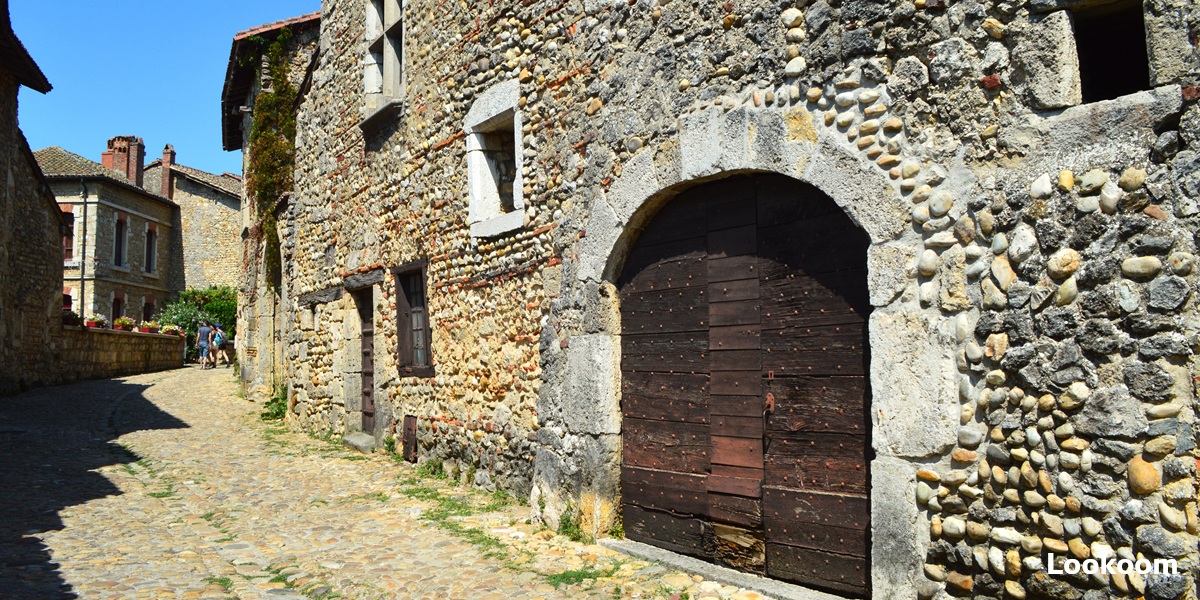
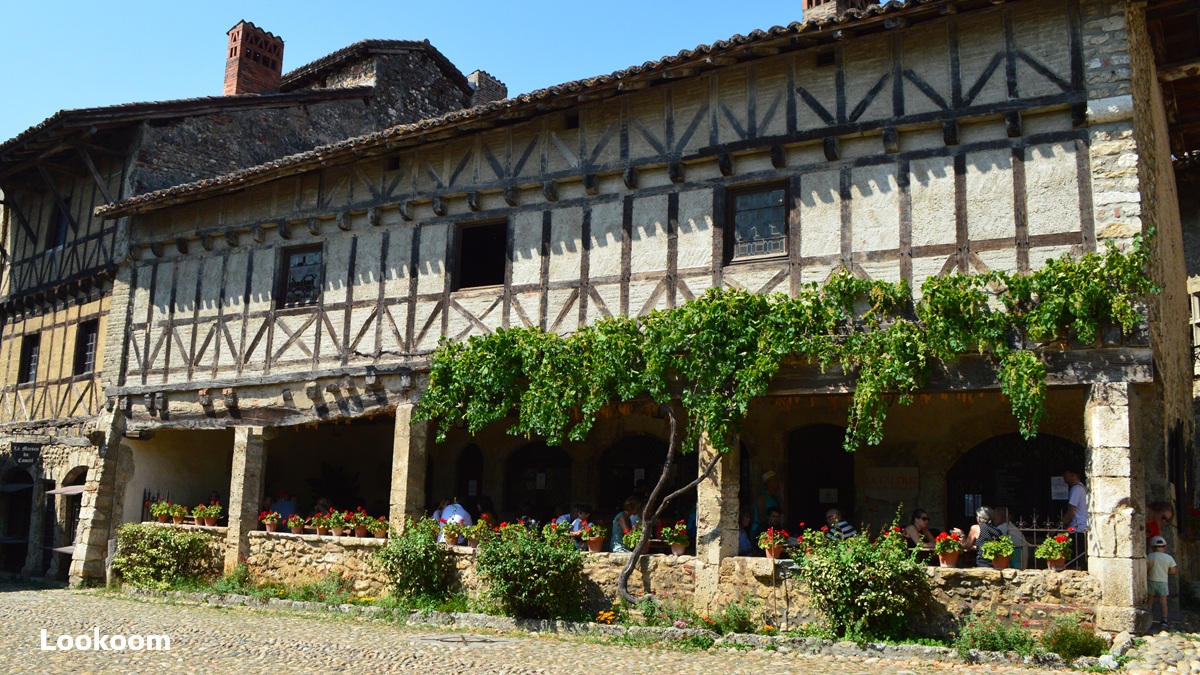
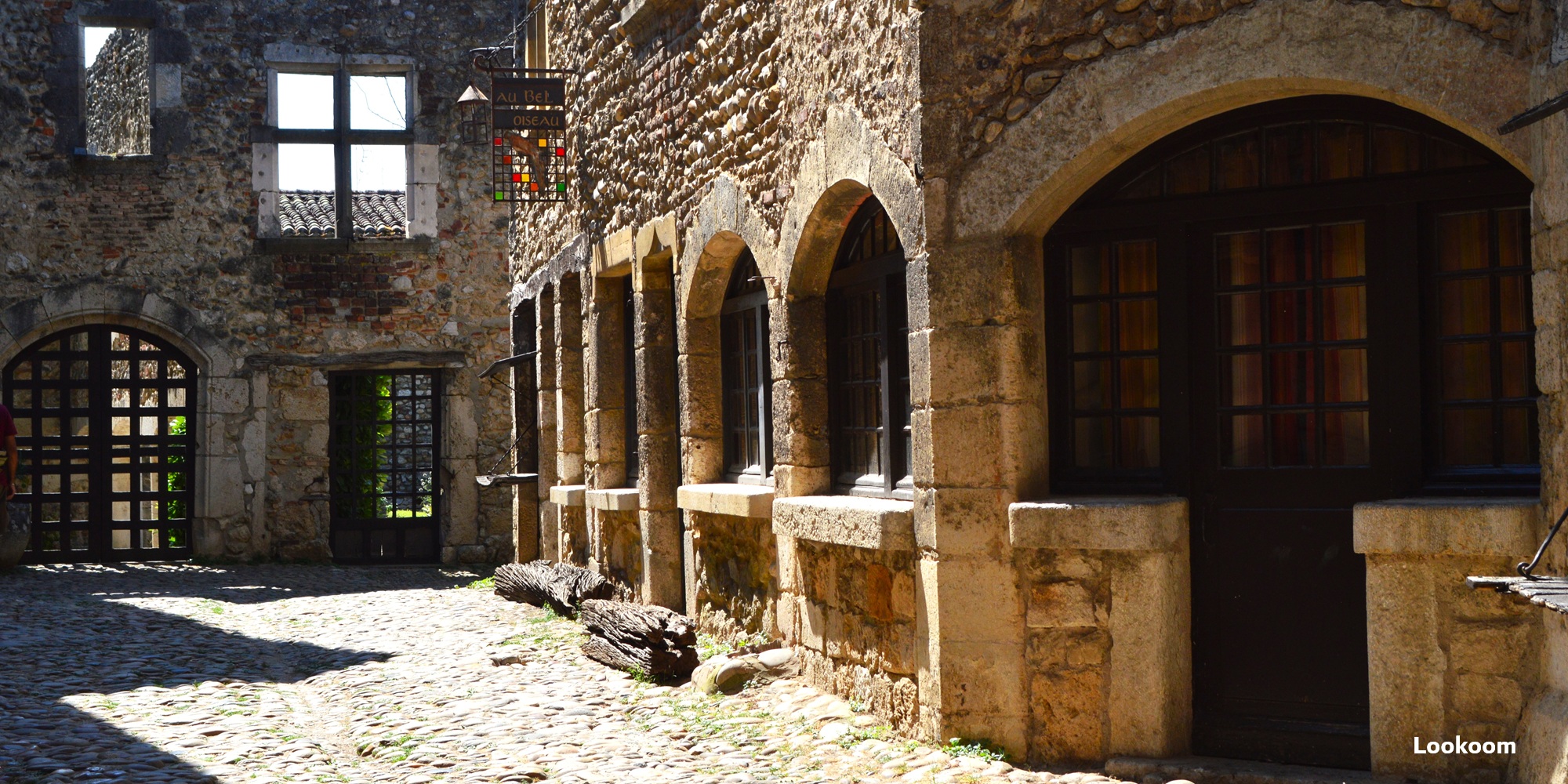
Perched on a small hill overlooking the Ain plain, Pérouges is one of the best-preserved medieval villages in France. Located about 25 miles, 40 kilometers, south of Bourg-en-Bresse and close to Lyon, it offers today the remarkable image of a town where time seems to have stood still. Behind its old fortified gates, cobbled streets, stone houses and half-timbered façades form a particularly harmonious ensemble.
Today, Pérouges attracts many visitors drawn by its exceptional heritage and preserved atmosphere. Listed among the ‘Most Beautiful Villages in France’, it has also served as a setting for several films and historical productions. Despite its popularity, it retains a genuine identity and remains one of the most remarkable examples of medieval heritage in the Auvergne-Rhône-Alpes region.
History
The history of Pérouges dates back to the Middle Ages, when the village became a small fortified town located between the Rhône Valley, Lyon and Bresse. The village lay within the political sphere of the German Roman Empire, under the authority of the Dukes of Savoy. This situation explains Pérouges’ historical links with Savoy and, more broadly, with the neighboring territories of Dauphiné. It was not until 1601 that Pérouges was incorporated into the Kingdom of France, along with Bresse, during the reign of Henry IV.
Its strategic position brought it a certain degree of prosperity, particularly through trade and craftsmanship. Over the centuries, however, Pérouges experienced a gradual decline. Its distance from the major routes and the changing patterns of trade contributed to its impoverishment, paradoxically allowing its medieval heritage to remain largely preserved.

Place du Tilleul
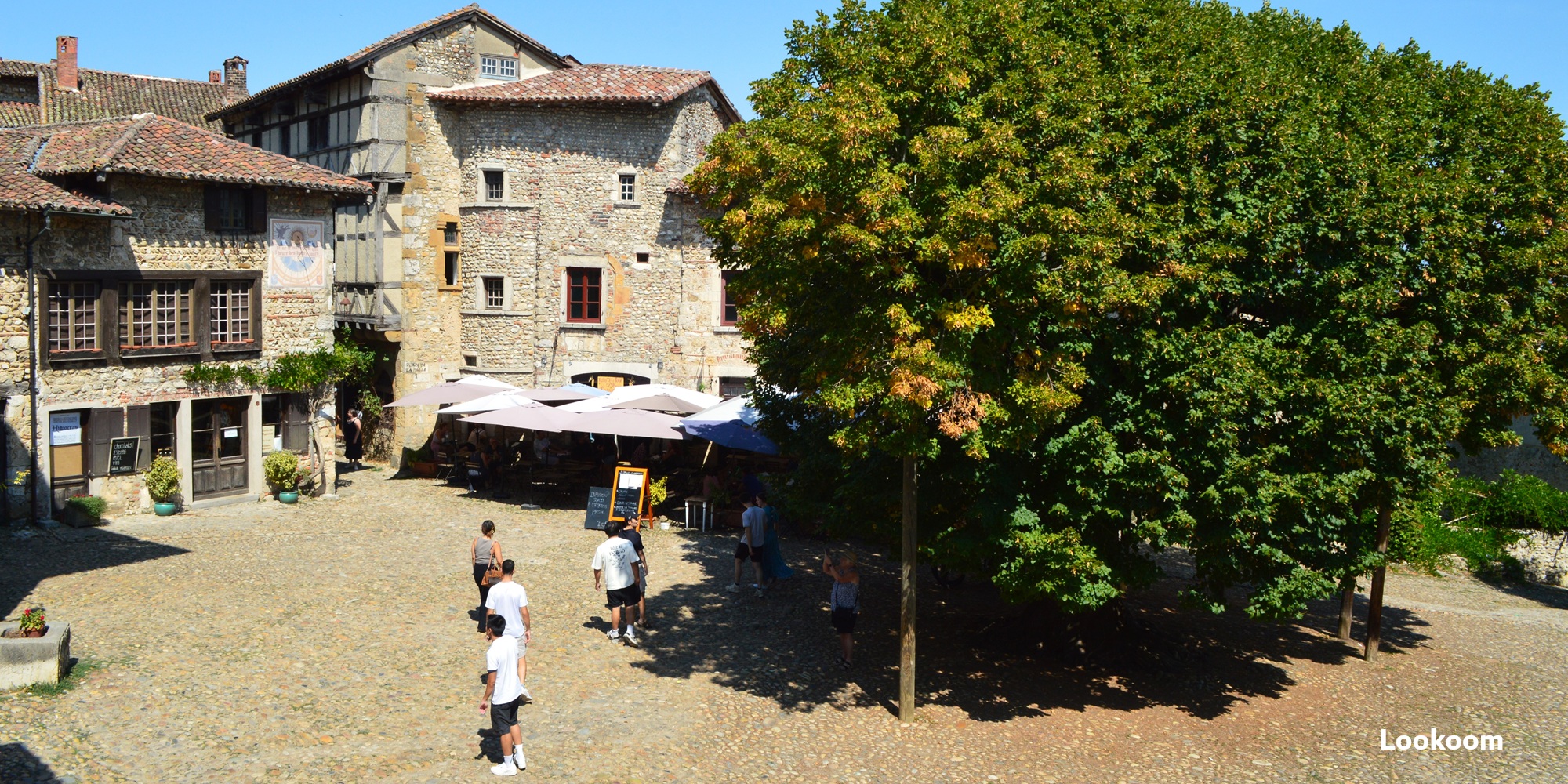
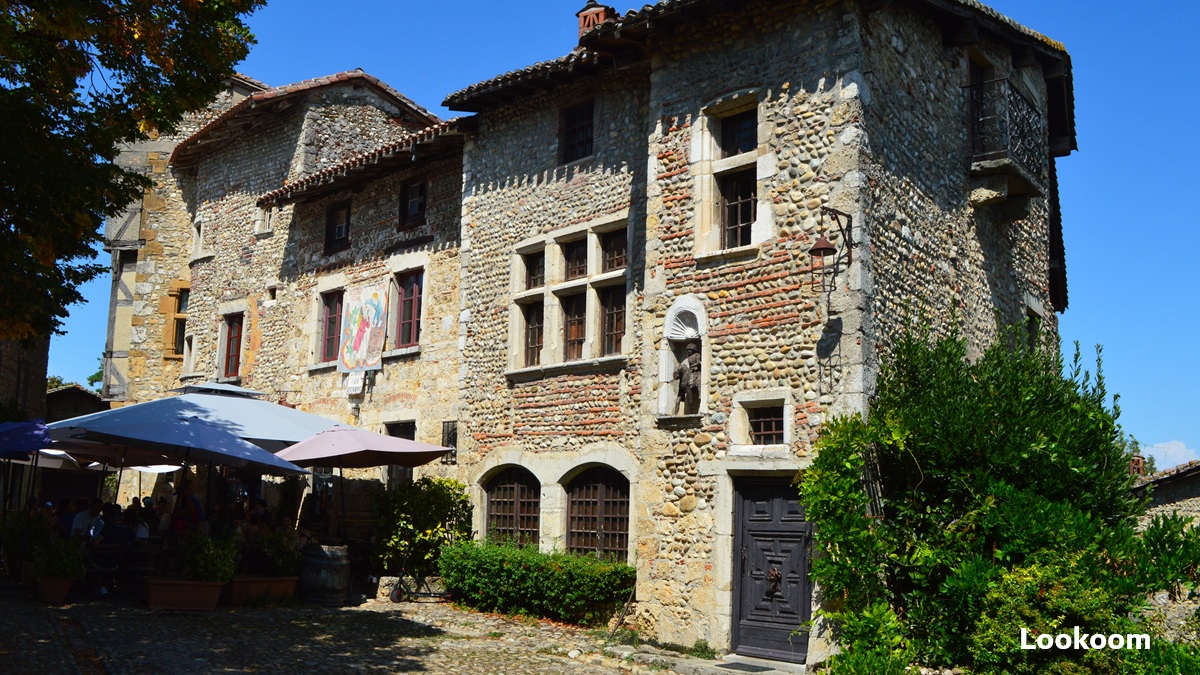
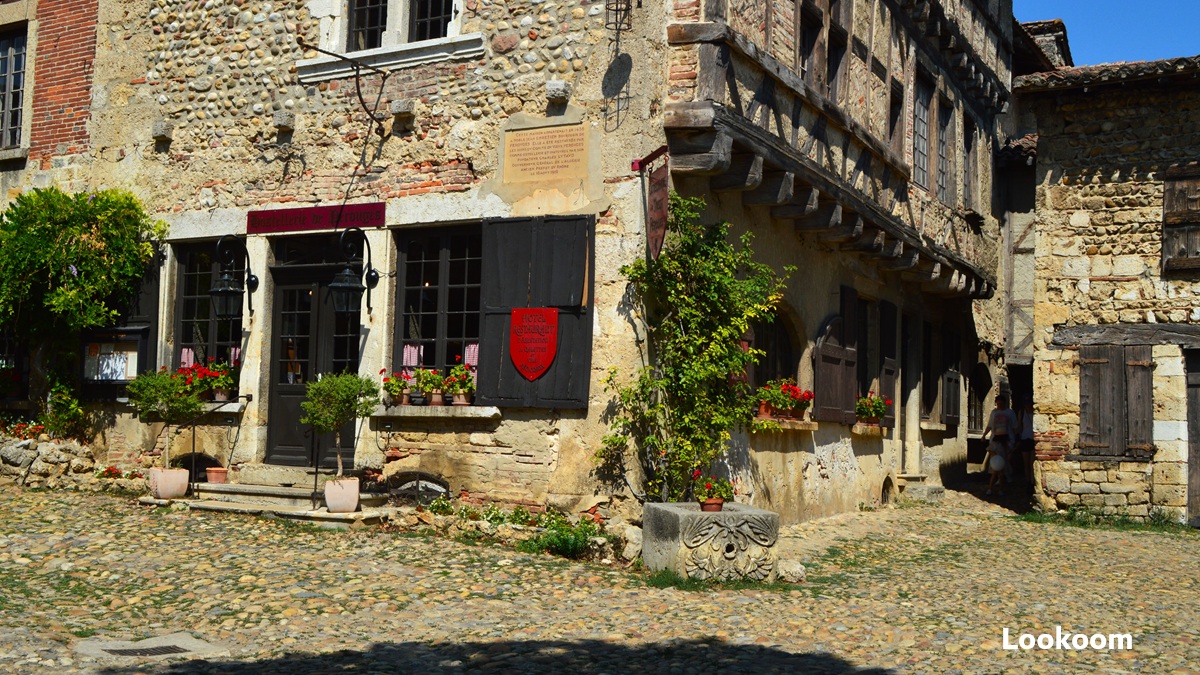
The heart of the village is organized around a few narrow, winding streets that converge on Place du Tilleul, the true centre of Pérouges. This square, dominated by an imposing lime tree planted after the French Revolution, is surrounded by beautiful old residences. The houses display a great diversity of forms, with stone constructions, half-timbered façades and roofs characteristic of the region’s traditional architecture. Some still retain their old shops or openings intended for craft activities.
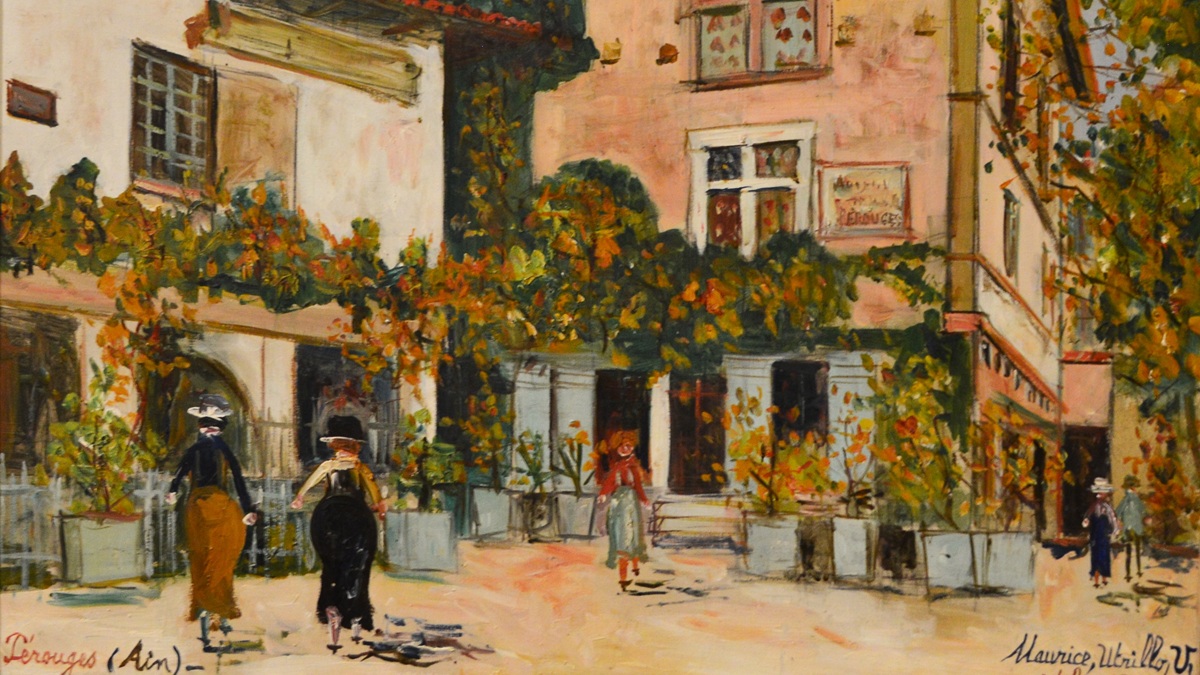
The painter Maurice Utrillo (1883-1955) painted a representation of it in 1936, now kept at the Municipal Museum in Bourg-en-Bresse.
The fortified church
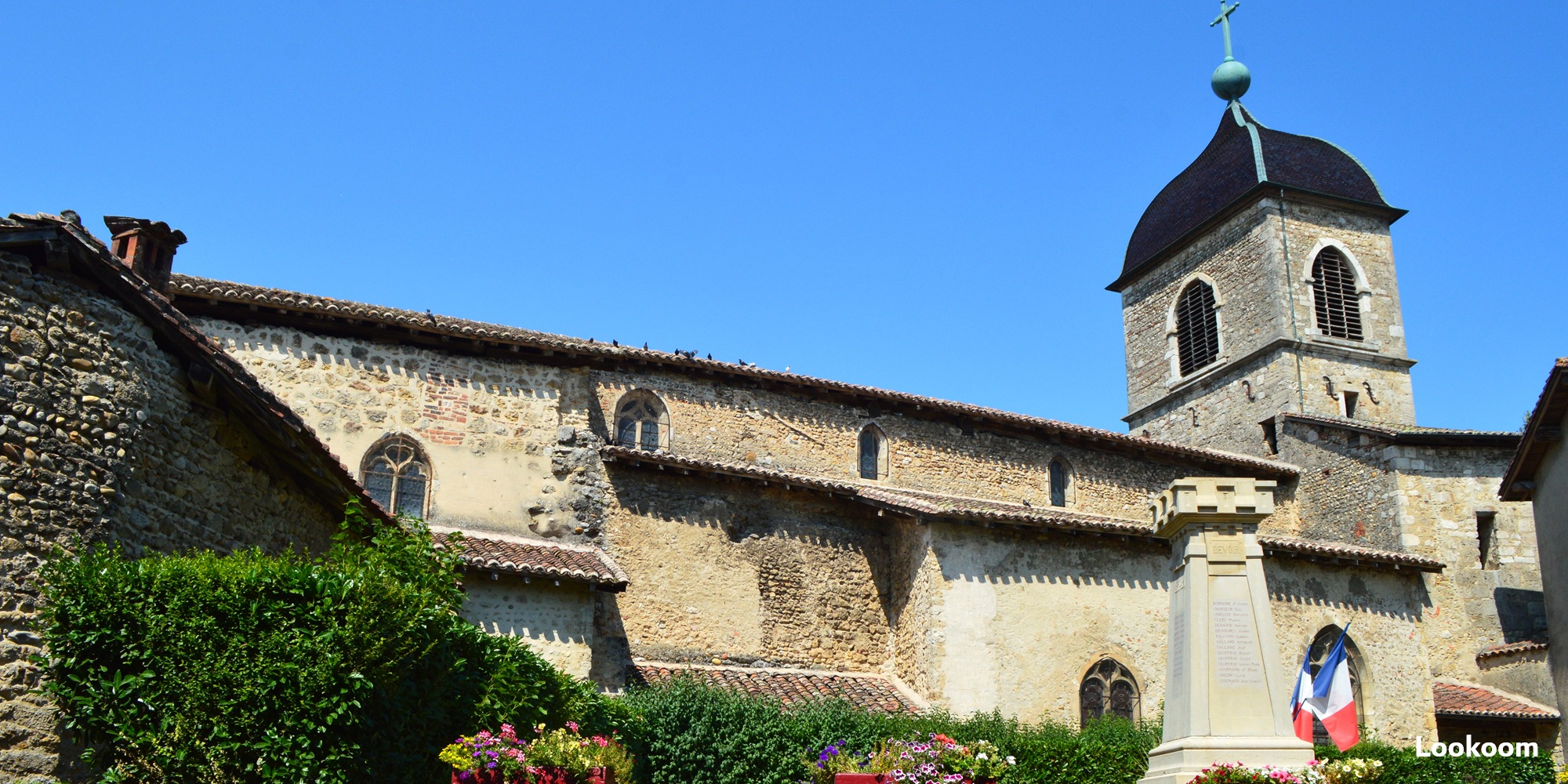
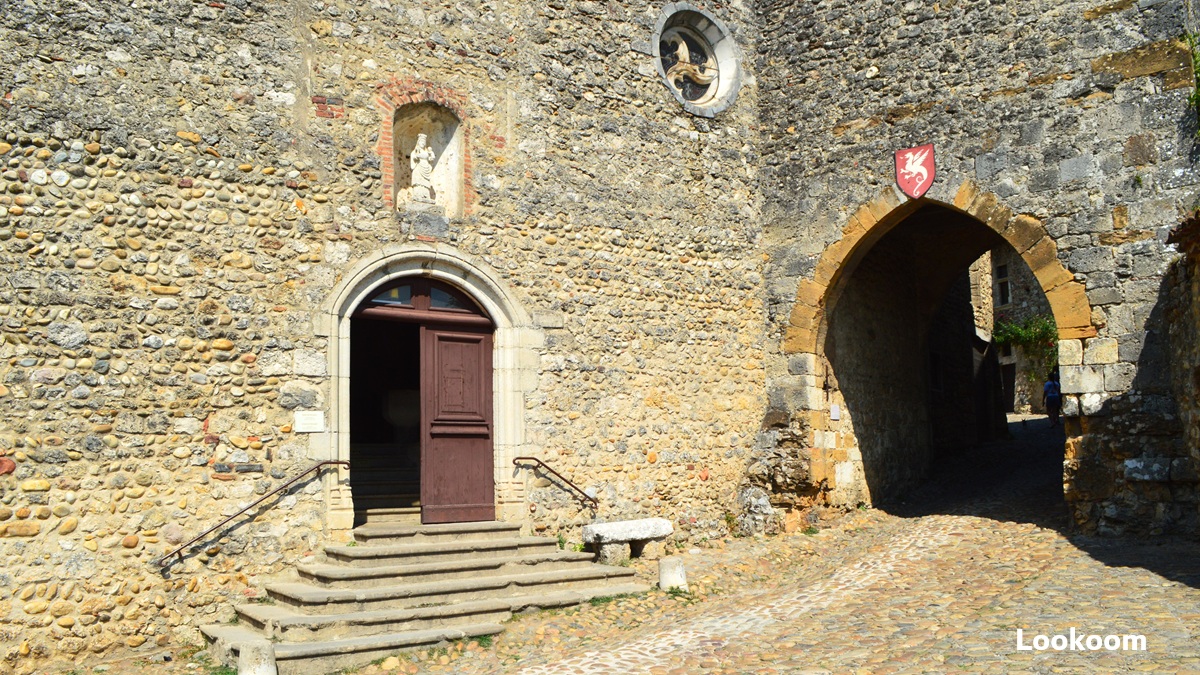
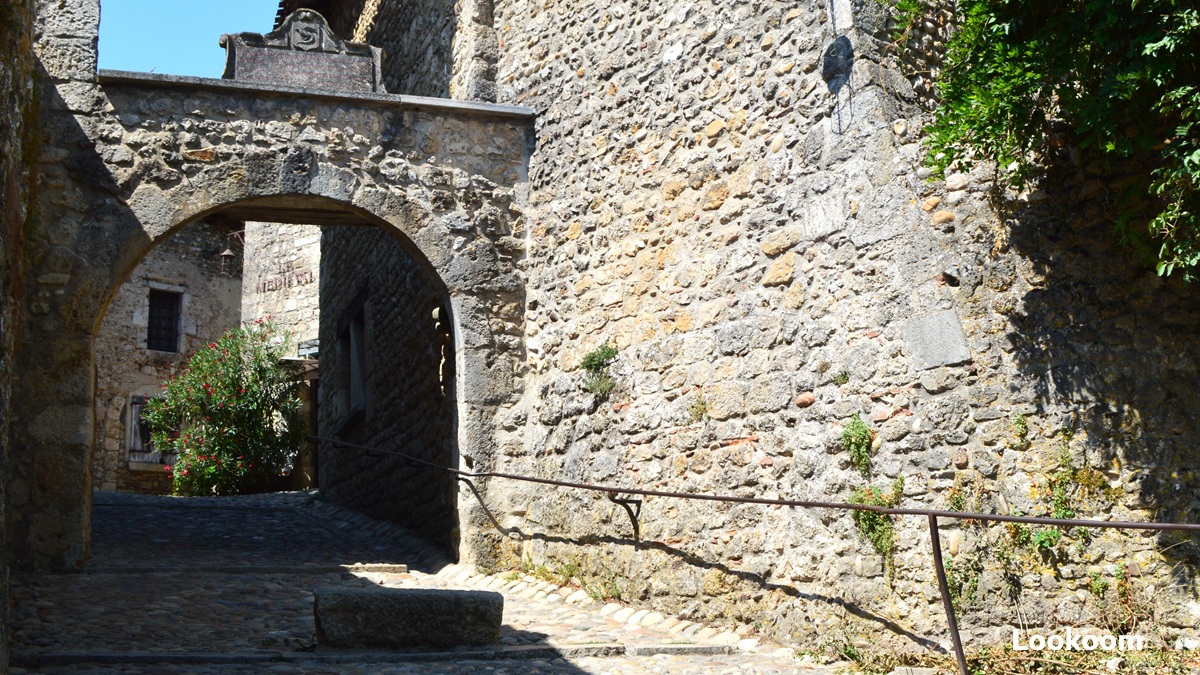
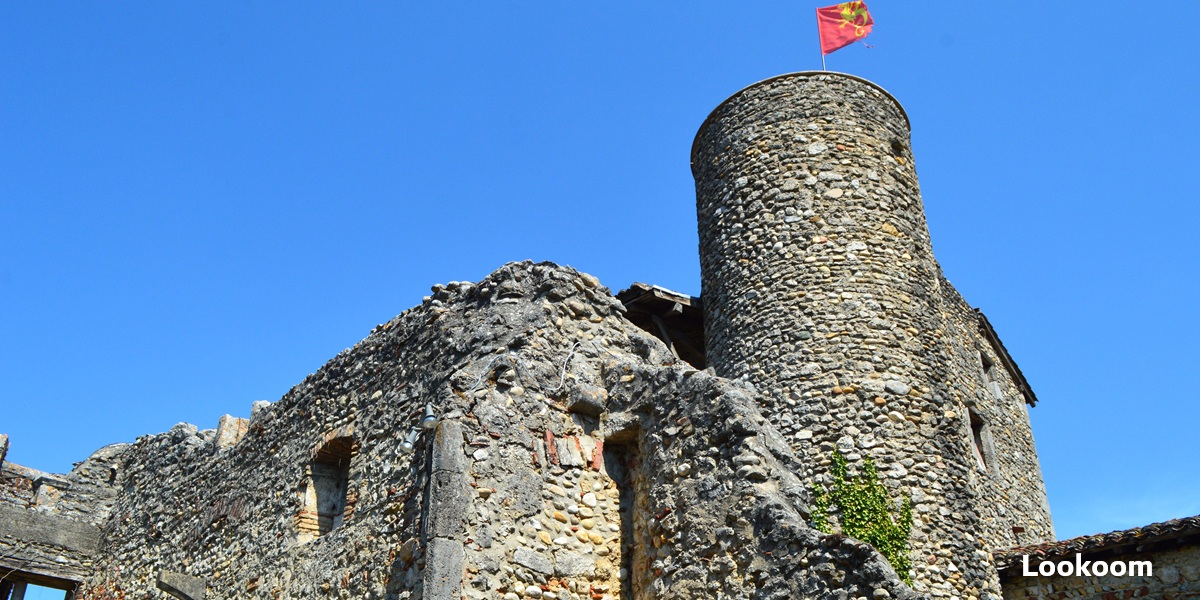
Among the main monuments is the fortified Church of Sainte-Marie-Madeleine, partly built in the 15th century. Its massive silhouette recalls the defensive role that a religious building could play in a fortified town. Nearby are the remains of the ramparts and the old gates that once controlled access to the village. The Porte d’en Haut and the Porte d’en Bas still bear witness to this defensive organization. The Porte d’en Haut, in particular, retains elements of the former defense system.
Maison des Princes
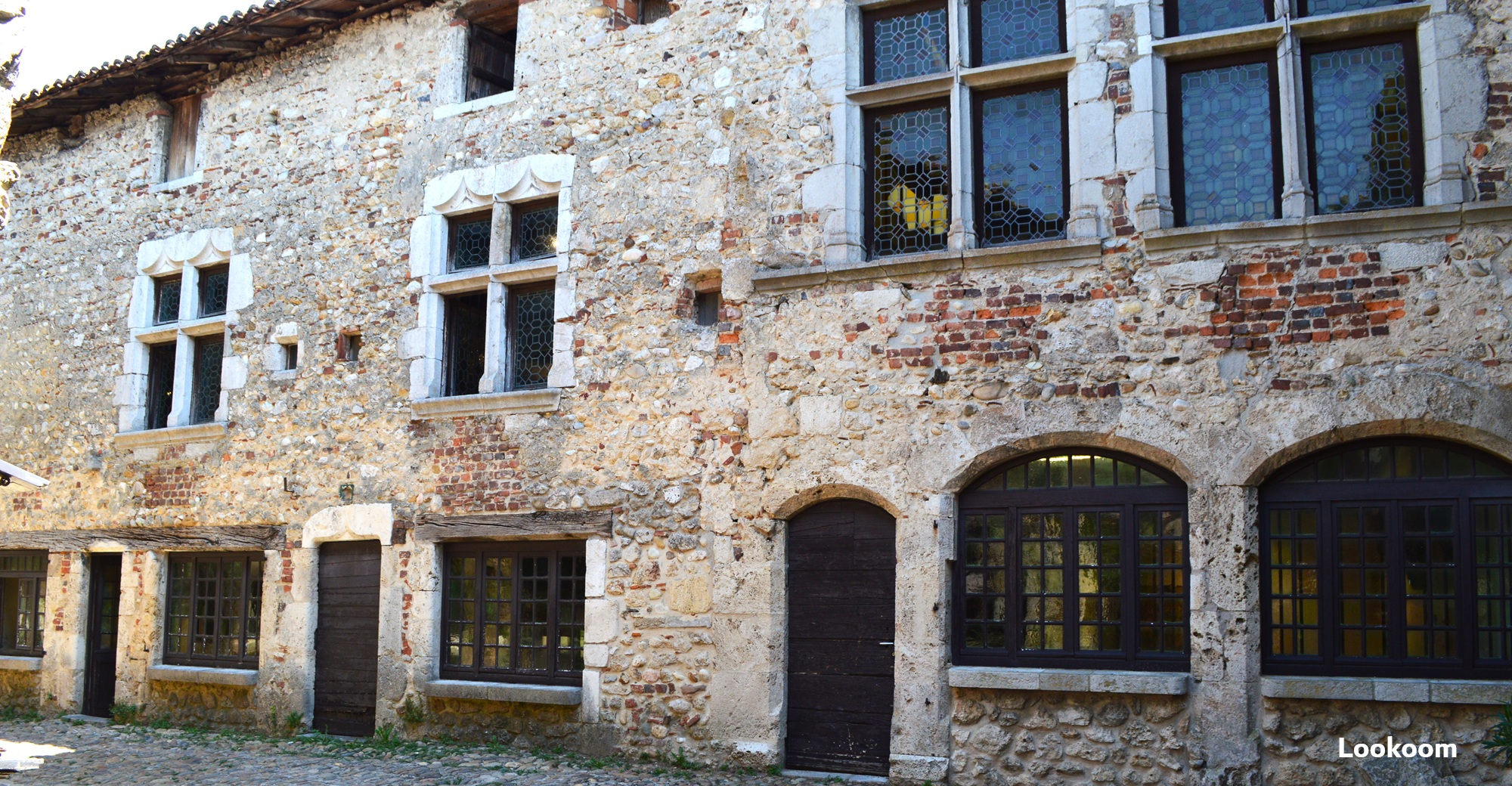
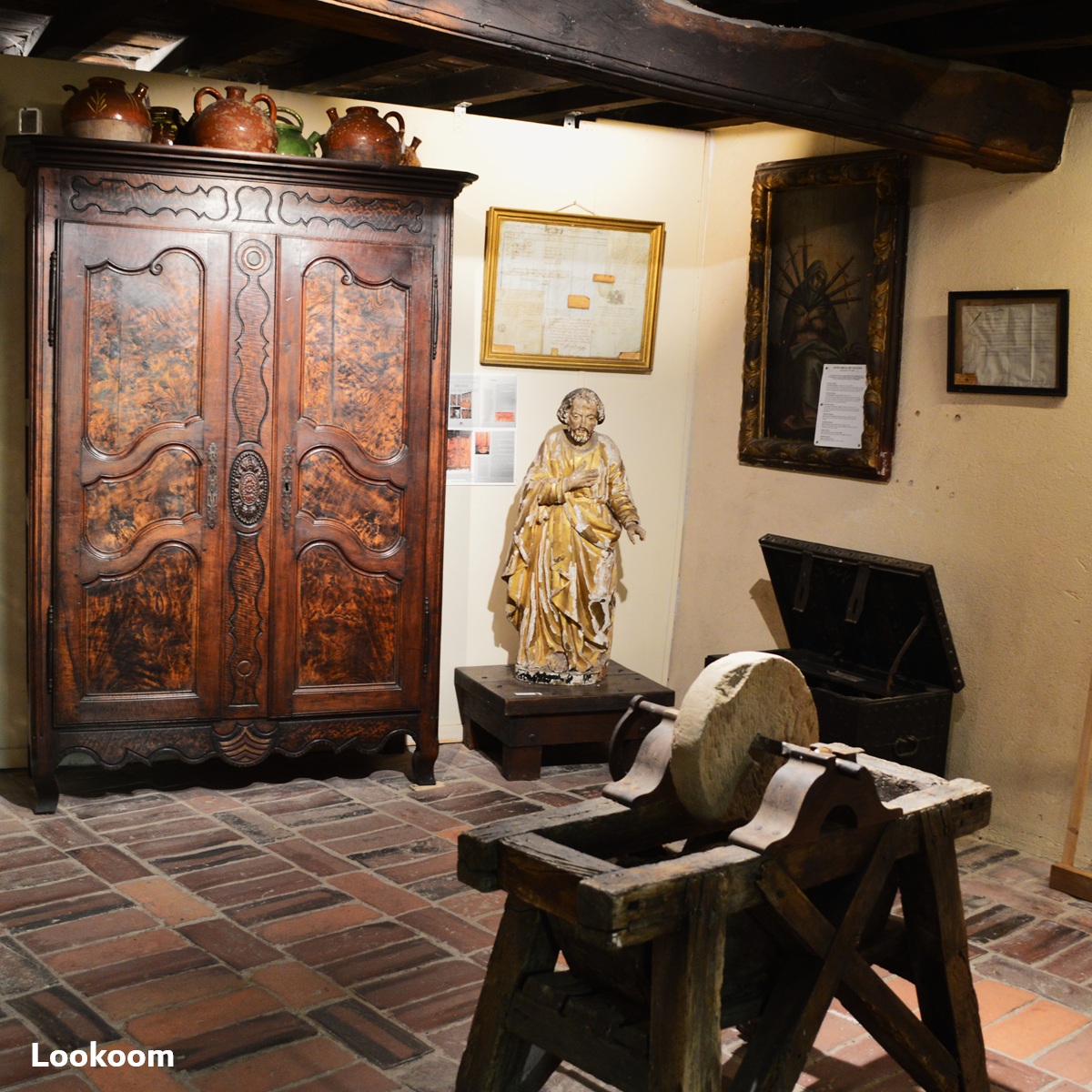
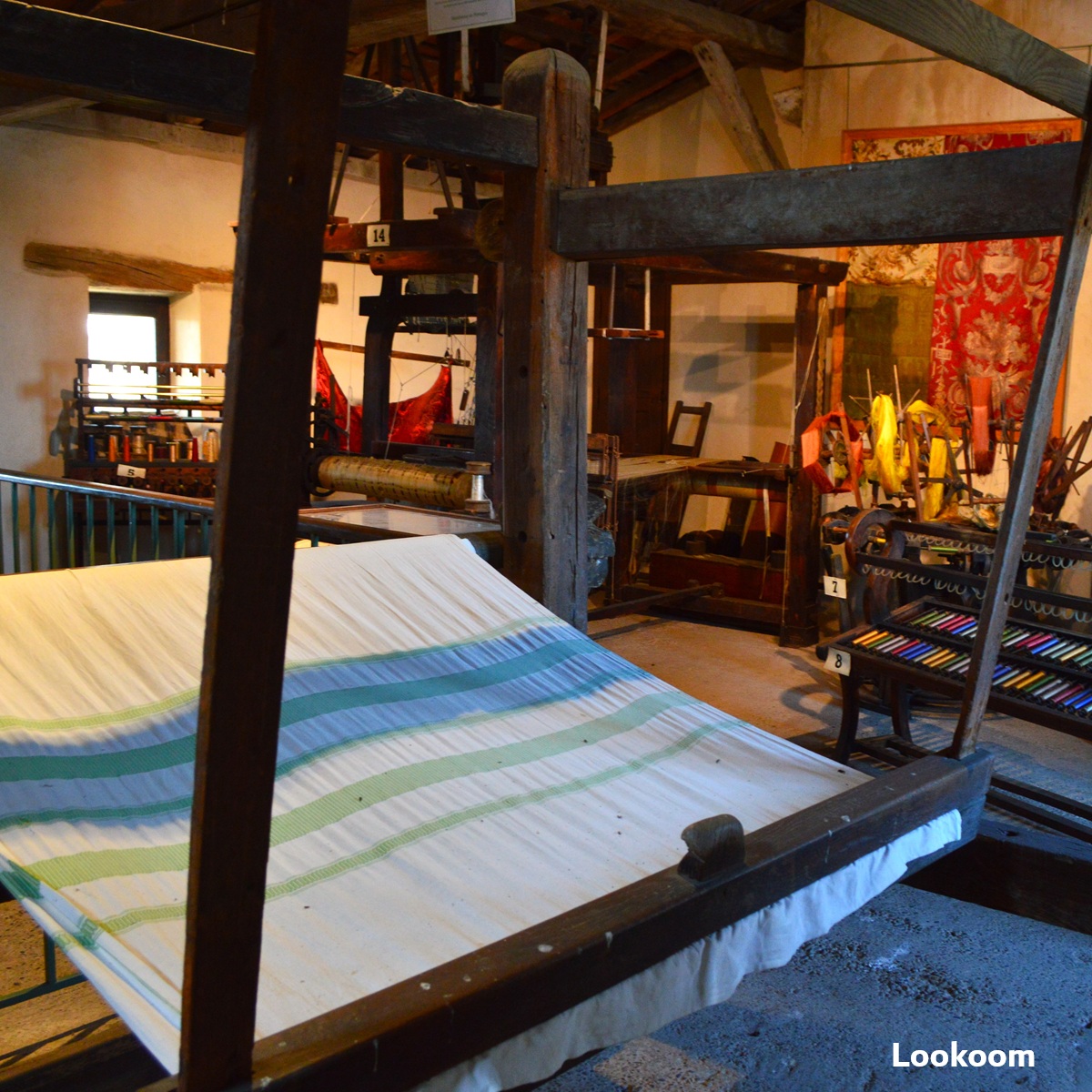
The Maison des Princes is one of the most remarkable residences in Pérouges. Located in the heart of the medieval village, it served as a residence for representatives of the Dukes of Savoy. Today, it houses the Musée du Vieux Pérouges, dedicated to the history and folk traditions of the town. The exhibits include old objects, traditional furniture, tools, historical documents and collections related to local life.
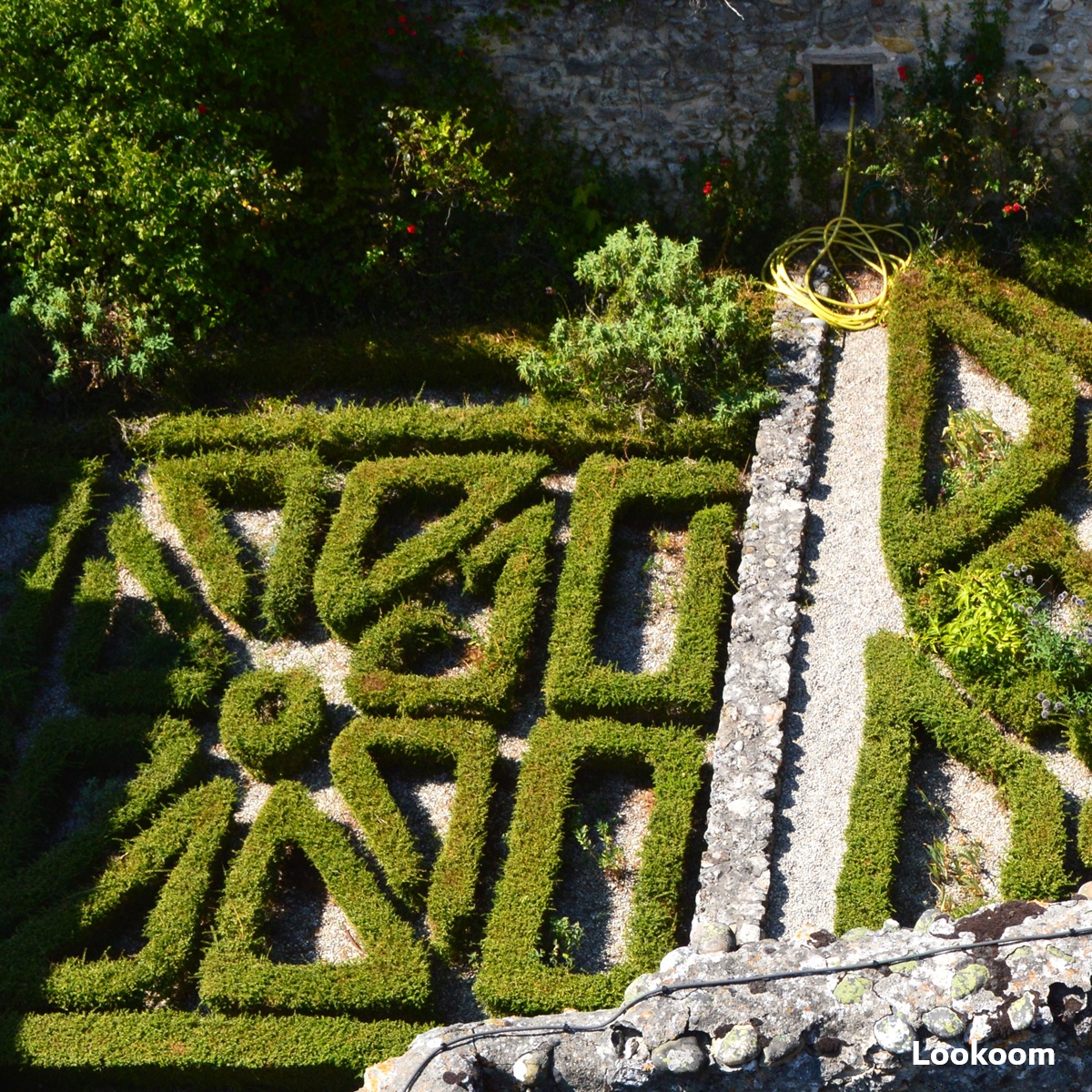
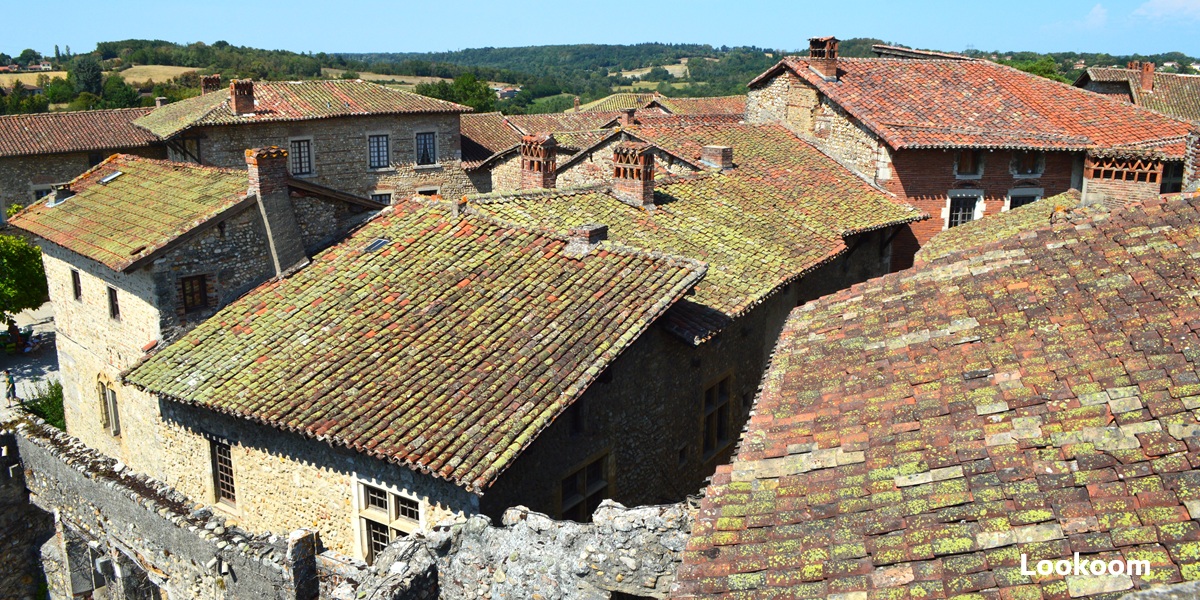
The visit also provides access to the watchtower, which offers a complete panorama of the rooftops of Pérouges. A small medieval garden completes the visit.
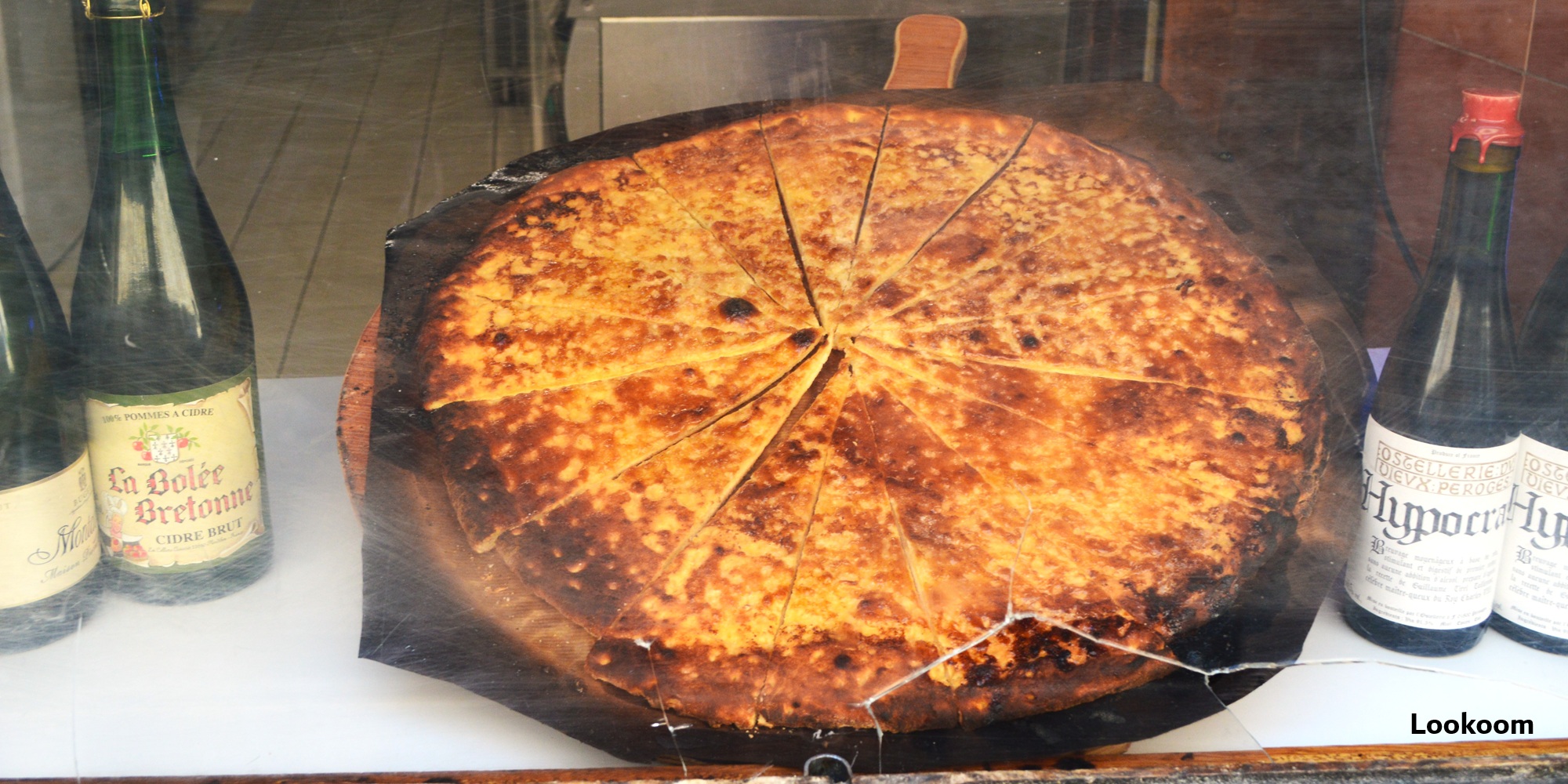
Pérouges galette
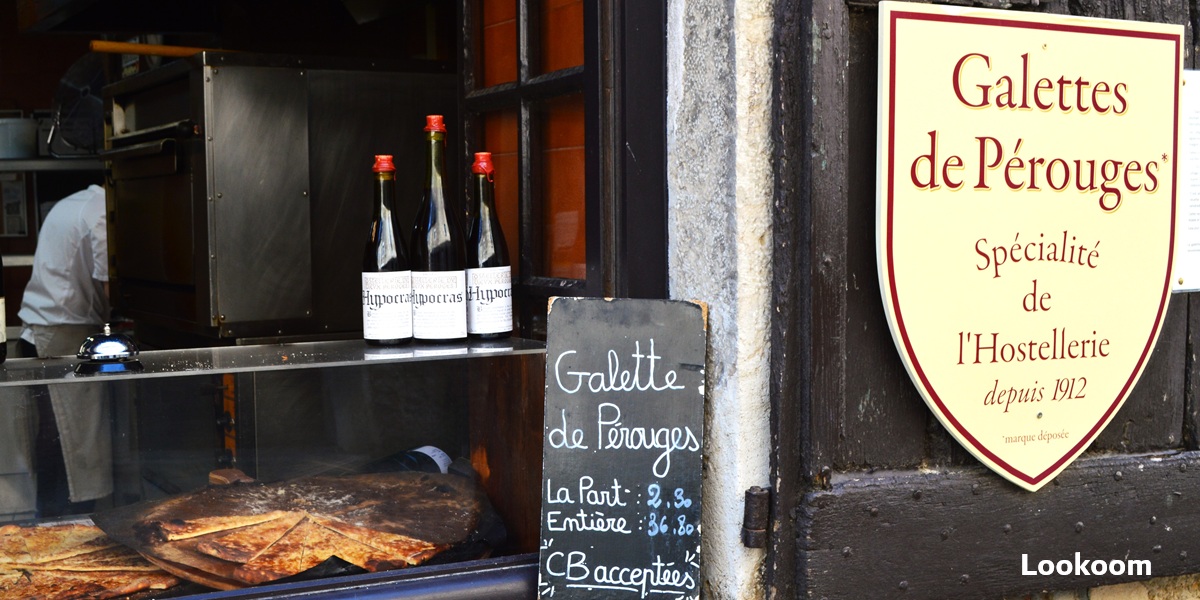
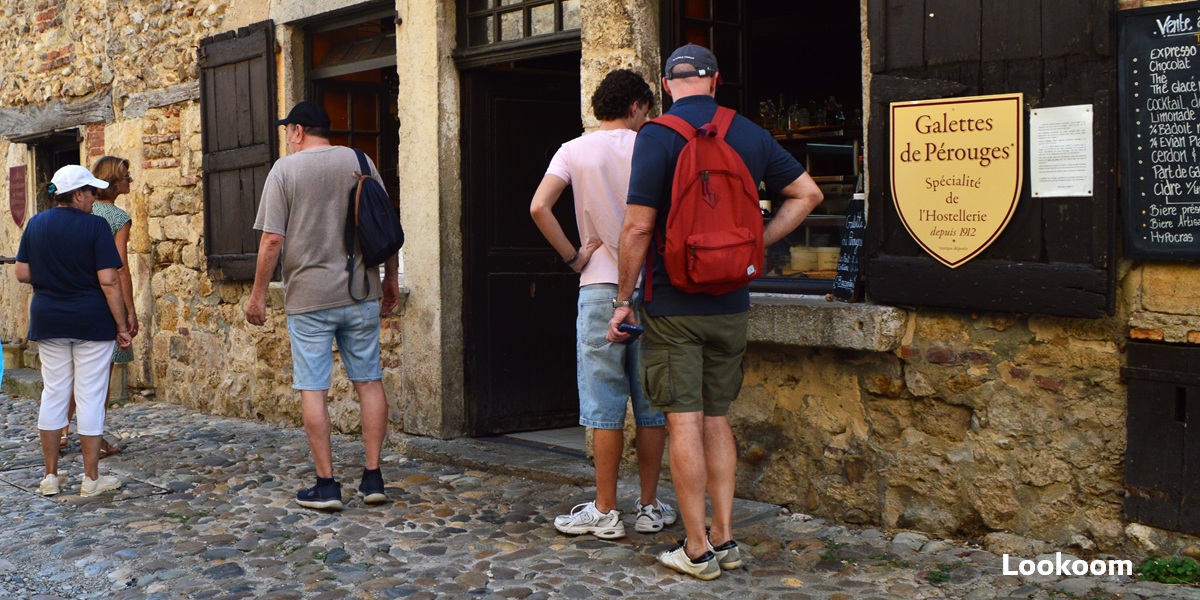
The galette de Pérouges is the village’s emblematic culinary specialty. This pastry, halfway between a tart and a brioche, consists of a thin, slightly leavened dough generously covered with butter and sugar. Served while still warm, the galette offers a particularly pleasant contrast between its soft dough, slightly crispy edges and caramelized surface. Sold in individual portions, it makes a welcome break after exploring the medieval streets.
To be informed of upcoming articles, register here
Articles about France:
…

Auvergne-Rhône-Alpes
Bourgogne-Franche-Comté
Bretagne
Centre-Val de Loire
Grand Est
Hauts-de-France
Ile-de-France
Normandie
Nouvelle-Aquitaine
Occitanie
Pays de la Loire
Provence-Alpes-Côte d’Azur
To be informed of upcoming articles, register here


It looks gorgeous….
LikeLiked by 1 person
A very pleasant visit indeed.
LikeLike
I love the old French Medieval villages. The one we explored was Entrevaux near Nice. Happy Sunday. Allan
LikeLiked by 1 person
These villages are preserved with such care. Even though they have become tourist attractions that dominate local life, the residents devote considerable resources to maintaining them in the traditional way.
LikeLiked by 1 person
What a lovely village. It looks like you’ve stepped back in time. It’s too bad they don’t make stone buildings like that anymore these days. The galette de Pérouges sounds delicious!
LikeLiked by 1 person
Pérouges really does feel like stepping back in time. The stone buildings and medieval streets are remarkably well preserved, and yes, the galette de Pérouges was delicious!
LikeLiked by 1 person
I can see why this is named one of the most beautiful villages in France. I love the stone architecture, it’s as though history is just trapped in time with the stone buildings.
LikeLiked by 1 person
That’s exactly it. Cars and motorbikes are parked outside the village; everyone plays along. All it would take is a few donkeys and horses to make it feel even more like a journey back in time.
LikeLiked by 1 person
All those lovely pictures look like scenes from a film, beautiful.
LikeLiked by 1 person
You’re absolutely right; the village has been used as a film location several times.
LikeLike